


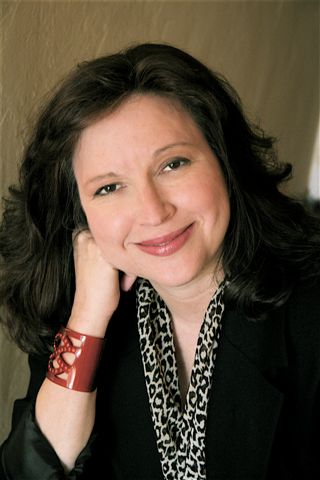
Diane Winston is a national authority on religion and the media as both a journalist and a scholar. Her expertise includes religion, politics and the news media as well as religion and the entertainment media. Professor Winston’s current research interests are religion and the entertainment media, media coverage of Islam and of changing Christianities, and the role of religion in American identity.
Winston’s courses examine religion, spirituality and ethics in relationship to journalism, entertainment media, American history and foreign policy. Her class on international religion reporting has taken students to cover conflict and coexistence in Israel and Palestine, growing secularism in Ireland http://trans-missions.org/ireland/, and elections in India http://trans-missions.org/india2014/. In addition to partnering with Global Post and KPCC, she has helped students place their work in outlets including the Washington Post, the Jerusalem Post, Der Spiegel, Christian Science Monitor, the Los Angeles Times and the Atlantic.
“Hollywood, Faith and Media,” her course on how television narratives incorporate religion, spirituality and ethics has hosted writer/directors such as David Shore (“House”), Barbara Hall (“Joan of Arcadia” and “Madame Secretary”) and Ronald Moore (“Battlestar Galactica” and “Outlander.”). The guest lectures are available on YouTube. Her other courses include American Religion, Foreign Policy and the News Media; American Spirituality: Radicals, Rebels, and Freethinkers, and Jesus is My Homeboy: An Introduction to American Religious History
In her work as Knight Chair, Winston routinely organizes conferences on religion’s role in the media. Convenings have explored post-9/11 television and the war on terror; religion and electoral politics; Arab democracy in the post-Arab Spring era; religion and the 2016 elections, and the Syrian refugee crisis. In fall 2015, she organized a Visions and Voices event, “Windows on Death Row” that featured editorial cartoons and art work from Death Row prisoners that illuminated the issue of capital punishment. In 2018 she received a Visions and Voices award to present “The Last of the Polish Jews,” film and panel discussion in January 2019
Winston is currently working on several research projects, including three books: Un/Real Religion: Religion and Reality TV, an edited collection; Lost and Found: Religion in Los Angeles, also an edited collection and A Shining City: Religion, News and Reagan’s America. Her other books include: The Oxford Handbook on Religion and the American News Media (Oxford University Press, 2012); Small Screen, Big Picture: Television and Lived Religion, editor, (Baylor University Press, 2009); Faith in the Market: Religion and the Rise of Urban Commercial Culture, co-edited with John Giggie, (Rutgers University Press, 2002); Red-Hot and Righteous: The Urban Religion of the Salvation Army, (Harvard University Press, 1999).
Before coming to USC, Winston was a program officer at the Pew Charitable Trusts. Between 1983 and 1995, she covered religion at the Raleigh News and Observer, the Dallas Times Herald and the Baltimore Sun and contributed regularly to the Dallas Morning News. She has won numerous press association awards and was nominated for a Pulitzer Prize for her work in Raleigh, Dallas and Baltimore. Her articles have appeared in the New York Times, Washington Post, Wall Street Journal, Los Angeles Times, and the Chronicle of Higher Education among other publications.
Winston received a Ph.D. in Religion from Princeton University. She also holds Master’s degrees from Harvard Divinity School, the Columbia University Graduate School of Journalism and Brandeis University.
Program Overview
In today’s world, religion plays a crucial role in domestic and international affairs. That’s why reporters benefit by understanding the importance of religion, spirituality, ethics and values to both individuals and society.
The John S. and James L. Knight Foundation, aware that religion coverage requires more than “a few good religious beat reporters,” conceived of the Knight Chair in Media and Religion as a rallying point for the re-visioning of religion in the news.
In 2002, the foundation awarded the $1.5 million Chair to the USC Annenberg School for Communication and Journalism in recognition of the school’s commitment to enhancing media coverage of religion in the 21st century and raising public awareness of religion’s socio-cultural significance. The school pledged to facilitate better coverage of religion, spirituality, ethics and values, and recruitedDiane Winston, Ph.D. to the Chair.
The Knight Program in Media and Religion is internationally recognized for its innovative research, practical resources and journalistic training. Thanks to the university’s many resources — including the School of Religion, Center for Religion and Civic Culture, the Jesse M. Unruh Institute of Politics, the School of Cinematic Arts, and the Norman Lear Center, as well as local stakeholders such as Hebrew Union College, Fuller Theological Seminary, and the Omar Ibn Al-Khattab Foundation, — the new Knight Program can integrate professional excellence with cutting-edge research. In addition, Southern California’s diverse religious constituencies — ranging from long-established Catholic, Protestant and Jewish communities to evangelicals, Buddhists, Hindus, Sikhs, Muslims and members of new religious movements — provide the ideal laboratory for the study and documentation of Diaspora religions as well as the more homegrown varieties.
The Knight Chair in Media and Religion participates in a wide range of activities, including fellowships for in-depth, explanatory reporting, conferences for working journalists, community events and resource development. Dr. Winston addresses a host of issues surrounding religion and media through her writing and public speaking, as well as her development of coursework and symposiums. Through these outreach activities, USC Annenberg has become a hub for re-visioning how the press—and society itself—thinks about and reports on religion.
Mission Statement
The Knight Chair seeks to establish the Annenberg School for Communication as a pre-eminent location for the enhancement of religion coverage—not simply confined to the traditional realms of religion reporting but one which proactively illuminates the intersection of religion and all beats, whether politics, environment, education, or entertainment. The Chair will develop courses for journalism students, sponsor public events, and initiate venture projects with local constituencies. The program aims to serve the news industry by working with media corporations and professional journalism associations to create an environment conducive to the critical understanding of religion, spirituality, and moral values as fundamental elements of coverage. In this capacity, the Chair will initiate continuing education programs that benefit journalists.
Recently
Quoted in the Century-old church sanctuary up for sale in Roanoke: Another bad omen for religion?, by Doug Thompson, Blue Ridge Muse, October 31, 2020
Radio.com. It’s Official, We’re All Doomed!, January 8, 2020.
The Difference Between Religion and Spirituality and the Role of Each with Dr. Diane Winston, Caring Magazine podcast, November 11, 2019.
Diane Winston on religion in Hollywood, Esras Films, October 10, 2019.
Franceinfo, Paris. VIDEO. “Il y a du sexe, de la violence, de l’argent” : une professeure américaine décrypte le succès de “Game of Thrones”. April 14, 2019.
link
i24NEWS, New York. Religious Broadcasting, NRB 2019. Take :30 with Derricke Dennis. March 28, 2019
Ethics and Morality in Game of Thrones, Interfaith Voices podcast, May 31, 2019
Game of Thrones Makes Us Question Evil In The Real World, by Diane Winston, Newsweek, May 17, 2019
Diane Winston at 8 minutes, 38 seconds in Exorcisms: How They Work and Why We’re Obsessed, NBC Los Angeles. November 1, 2018.
“How Do You Like It So Far? Podcast” Diane Winston on Religion and Reality Television
Podcast with Professor Henry Jenkins, September 15, 2018.
Interviewed at
Radio.com. It’s Official, We’re All Doomed!, January 8, 2020.
PBS News Hour. Millennials are leaving organized religion. Here’s where some are finding community, January 2, 2020.
BYU Radio. Homicide-by-Overdose, Satellite Troubles, Red Kettle Campaign, December 11, 2019.
Caring Magazine. The Difference Between Religion and Spirituality and the Role of Each with Dr. Diane Winston, November 11, 2019.
Esras Films. Diane Winston on religion in Hollywood, October 10, 2019.
Politics! Politics! Politics! How every 2020 candidate talks about religion – Interview with Diane Winston, July 23, 2019.
Interfaith Voices. Ethics and Morality in Game of Thrones. May 31, 2019
GroundTruth. The do’s and don’ts of religion reporting. Retrieved from May 2, 2019.
Franceinfo, Paris. VIDEO. “Il y a du sexe, de la violence, de l’argent” : une professeure américaine décrypte le succès de “Game of Thrones”. April 14, 2019.
ABC Life, Sydney. Game of Thrones’ family problems have things to teach us about our own families. April 14, 2019.
i24NEWS, New York. Religious Broadcasting, NRB 2019. Take :30 with Derricke Dennis. March 28, 2019
Refinery29.com, Has Catholicism Earned This “Fashion” Moment?, May 3, 2018
“Trumping the Religious Right: How Politics and Religion are Changing” Panelists Diane Winston (USC), Jeff Guhin (UCLA), Brad Christerson (Biola University) and Rebecca Sager (Loyola Marymount) spoke on why President Trump’s most ardent supporters are members of the religious right, and how his presidency has supported their goals. A full room of listeners learned how and why this perhaps counterintuitive alliance came together and stays together, and what that says about different ways that conservative religion enters U.S. political life today. Loyola Marymount University Speaker Series, Los Angeles, CA, March 19, 2018
“The Future of Religion Storytelling in Mainstream Media featuring Jason DeRose Jason DeRose,” Reimagining Religion 2018: New Stories, New Communities,” USC, Los Angeles, CA, January 26, 2018
“From Reagan to Trump: Religion, Politics, and the US News Media,” David L. Dungan Memorial Lecture, UT Knoxville, February 6, 2018. Webcast: https://bit.ly/2GkNxoA Podcast: https://bit.ly/2GneMLg
Articles about Diane Winston:
Religious Conservatism and the Trump Presidency conversation held by sociology department, by Mitch Storey, Loyolan, March 25, 2018
The SMU Daily Campus, February 2, 2012
The Daily Trojan: Helping Journalists Keep the Faith, October 13, 2008
Articles by Diane Winston:
National Prayer Breakfast was a moment for leaders to show humility — Trump changed it, Salon, February 10, 2020
How Gay Rights went Mainstream — and what it cost, Washington Post, June 30, 2019
Game of Thrones makes us Question Evil in the Real World, Newsweek, May 17, 2019
How can Christians support Donald Trump? Religion News Service, December 17, 2018
How Salvation Army’s red kettles became a Christmas tradition, TheConversation.com, November 28, 2018
For many South Korean Christians, reunification is a religious goal, TheConversation.com, June 1, 2018
How a group of California nuns challenged the Catholic Church, TheConversation.com, December 6, 2017
A Pence Presidency Would Give Margaret Atwood’s Dystopian Vision a Run for its Money, Religion Dispatches, May 22, 2017
Two Sides of the Same Coin. Teaching Spirituality and Religion to Millennials, Tricycle, Spring 2017 Issue
‘Under God…It’s a Great Thing’: Trump Delivers for his Christian Base, Religion Dispatches, February 2, 2016
National Prayer Breakfast: What does its history reveal? TheConversation.com, February 1, 2017
Might, Right, and White Privilege: It’s Morning in America, the Sequel, Religion Dispatches, November 9, 2016
“There is Sin and Evil in the World”: Reagan, Trump, and the News Media, Los Angeles Review of Books, September 2016
Capital in the (Seventeenth) to Twentieth Century, Marginalia: Los Angeles Review of Books, December 2015.
Millennials and the ‘Nones’: Why 40 Years of Religion in US Elections May Change in 2016, Vice, June 20, 2015.
Rage Against the (New Age) Machine: Three Days at the Osho International Meditation Resort, Religion Dispatches, December 29. 2014.
More Religion in Politics? New Poll’s Findings may be Overhyped, Religion Dispatches, September 24, 2014.
Shutdown is over but will There be a Next Time, Religion Dispatches, October 17. 2013.
Pope Francis’ woman problem, Los Angeles Times, August 4, 2013
Jerusalem Honors Right-Wing Mogul Sheldon Adelson, Religion Dispatches, June 3, 2013
The Myth of News Media as Secularist Conspiracy, Religion Dispatches, April 16, 2013
As Irish Flee the Church, a Push for Reform, Religion Dispatches, March 18, 2013
Does Digital Communication Encourage or Inhibit Spiritual Progress? Big Questions Online, January 15, 2013
The evolving politics of faith, Los Angeles Times, September 9, 2012
William Booth’s army of salvation, Los Angeles Times, July 29, 2012
Heterosexual Martyrs and Gay Saints: Did AIDS Coverage Clear the Way for LGBT Equality? Religion Dispatches, July 16, 2012
Do You Have Faith in the Media? Washington Post, April 5, 2012
Review of The Mormon People by Matthew Bowman and LDS in the USA by Lee Trepanier and Lynita K. Newswander, Washington Post, March 9, 2012
Tea Party, Circa 1930s, Religion Dispatches, September 26, 2011
Spreading the Good Word, Online New York Times, September 8, 2011
Review of “Inside Scientology,” The Washington Post, July 14, 2011
Religion and AIDS at 30, The Huffington Post, June 7, 2011
Student Reporters Take on the Mideast Beat, The Chronicle of Higher Education, January 16, 2011
Did Mad Men Get Religion? The Huffington Post, October 20, 2010
God Bless This Mess? The Jewish Journal, October 13, 2010
What Americans Really Need to Know About Religion, The Huffington Post, October 6, 2010
Gunning for the Pope? The Huffington Post, July 6, 2010
Pat Tillman and Prop 8: Two New Documentaries’ Take on God and Power, The Huffington Post, June 22, 2010
Hidden in Plain Sight: Israel’s Palestinian Citizens, The Huffington Post, March 22, 2010
City on a Hill: Can the U.S. Provide a Model for Israel? The Huffington Post, March 17, 2010
Israeli Right Demonizes Israeli Left, With American Money, Religion Dispatches, February 22, 2010
Capricology: Television, Technology and the Sacred, a blog launched on January 29, 2010 at Religion Dispatches.
Epidemics, Inoculation and God’s Will, The Washington Post, October 1, 2009
Give Me That Small Screen Religion, Religion Dispatches, July 27, 2009
To Serve God and Wal-Mart: The Making of Christian Free Enterprise (review), Religion Dispatches, June 21, 2009
Covering Religion in the New Year: The Atheist Bus and More, Religion Dispatches, January 9, 2009
Back to the Future: Religion, Politics and the Media, American Quarterly,September 2007
Press Coverage of Religion Tilts Right, The Huffington Post, June 7, 2007
Falwell had a dream, The Huffington Post, May 22, 2007
Forgetting Falwell, The Revealer, May 17, 2007
iFaith in the Amen Corner: How Gen Y is Rethinking Religion on Campus
Social Science Research Council: The Religious Engagement of American Undergraduates, May 11, 2007
And over 100 more publications.
Recent Presentations:
Moderator, “Is U.S. coverage on Israel/Palestine changing, and if so, how?” Can we talk about it? Reframing the discourse on Israel/Palestine, USC, Los Angeles, CA, April 5, 2019
Panelist, “Trumping the Religious Right: How Politics and Religion are Changing,” at Loyola Marymount University. Panelists Diane Winston (USC), Jeff Guhin (UCLA), Brad Christerson (Biola University) and Rebecca Sager (Loyola Marymount) spoke on why President Trump’s most ardent supporters are members of the religious right, and how his presidency has supported their goals. A full room of listeners learned how and why this perhaps counterintuitive alliance came together and stays together, and what that says about different ways that conservative religion enters U.S. political life today. Loyola Marymount University Speaker Series, Los Angeles, CA, March 19, 2018
Moderator, “Reimagining Religion 2018: New Stories, New Communities,” panel “From Non-fiction to Fiction,” USC, Los Angeles, CA, January 26, 2018
Panelist, “Challenges in Political Coverage as Related to Jews and Judaism,” American Jewish Press Association 2017 Conference, Los Angeles, CA, November 14, 2017
Panelist, “Culture, Race and Religion,” Speaking Across the Divide series, Unruh Institute, USC, Los Angeles, CA, October 6, 2017
“From Reagan To Trump: Religion, Ethics and The News Media,” Lecture delivered at the Chautauqua Institution, August 17, 2017
“Diane Winston in conversation with Jim Fallows” post-lecture discussion, the Chautauqua Institution, August 17, 2017
Panelist, “Rethink. Reframe. Respond. Navigating a World in Transition: Creating New Maps for Foreign Affairs,” Center for the Study of Religion, Culture and Foreign Affairs. Online Webinar Conference on Foreign Affairs. Claremont Lincoln University, Claremont, CA, September 12-13, 2017
“What Would a Pence Presidency Look Like?” Featured Speaker. Hammer Forum, UCLA, May 16, 2017
“Religious Nones,” Featured Speaker. Reimagining Religion Conference, USC Center for Religion and Civic Culture. February 9, 2017
Keynote, “Religion in the News,” Religion and Public Life Program, Rice University, Houston, TX, November 4, 2016
Panelist, “Perception and Reality: Religion in the 21st Century,” USC Caruso Catholic Center in partnership with the Institute for Advanced Catholic Studies, USC, October 29, 2016
Panelist, “Academics Online: Religion and Media,” Pittsburgh, PA, October 24, 2016
Panelist, “Working in Media and Religion,” Indianapolis, IN, October 9, 2016
Paper, “Re/Covering an American Religious Imaginary: Reagan, Religion and the News Media,” International Society for Media, Religion and Culture, Seoul, Korea, August 3, 2016
Paper, “Chrisley Knows Best: Flaunting Christian Patriarchy in the 21st Century,” International Society for Media, Religion and Culture, Seoul, Korea, August 2, 2016
Panelist, “God in the Voting Booth? The Role of Religion in American Presidential Politics,” Academy for Judaic, Christian and Islamic Studies at UCLA, Los Angeles, June 2, 2016
“A View from the White House: 20 Years of Faith-State Partnerships,” USC, September 2016
Discussion with Krista Tippett on her book, “Becoming Wise: An Inquiry Into the Mystery and Art of Living,” Wilshire Temple, Los Angeles, April 21, 2016.
“Understanding Syria’s Refugee Crisis,” Conference, USC, February 26, 2016.
“Dead Man Walking the Journey Continues,” keynote by Sr. Helen Prejean, and “Windows on Death Row” art exhibition, USC, October 22, 2015
“Godless Politics: Bernie Sander, The Rise of Secular Humanism and the Future of American” USC, October 7, 2015
“What Matters to Me and Why,” USC- Office of Religious Life, Los Angeles. November 6, 2014.
Keynote Address, “Covering a Conflict without Adding to it,” Jewish Student Press Association, Los Angeles, October 31, 2014.
“Religion, Democracy and the Arab Awakening,” Conference, USC, April 25, 2014, co-sponsored with USC Center for Islamic Thought, Culture and Practice and Global Post.
Lecture and Seminars on the online Atlas of Global Pentecostalism, USC, February 24-25, 2014.
“Sex, Drugs and Religious Accommodation,” Working Group on Religious Accommodation, USC, September 17, 2014.
“Coverage of AIDS in Secular and Catholic Newspapers, Logos of Love Conference, University of Dayton, Dayton, OH September 20, 2013.
“All the News That Fit to Print: Coverage of Religion and Sexuality in the First Decade of the AIDS Crisis, San Diego State, May 30, 2013.
“Did You Hear the One About the Politician and the Evangelical Pastor Meet-Up in Heaven?: Religion in Political Discourse,” UCLA Center for the Study of Religion, October 30, 2012.
“Religion, Politics and Journalism in the 20th Century,” All Saints Church, Pasadena, CA, May 20, 2012.
“Religion, Sexuality and AIDS: All the News That’s Firt to Print?” at “Media, Religion and Social Transformation,” a conference sponsored by the Center for Religion and Media at New York University, April 26, 2012.
Lecturer at the Institute for Advanced Catholic Studies, USC Religion and American Journalism Conference, March 28, 2012
Moderator, “Looking for Judaism in (Un) Conventional Places,” asymosium hosted by the Center for Jewish Studies at UCLA, Feb. 13, 2012
Panelist on “Teaching Religion in Public Schools,” KCRW
Lecturer on the impact of the media on the Salvation Army’s mission and identity at a public symposium on “The Relationship of Religion and Philanthropy in Religious Philanthropic Organizations” at Indiana University-Purdue University Indianapolis October 8, 2010
Panelist: “Religion and Media,” Ford Foundation Board of Trustees, April 21, 2009
“Religion, Media and Nonprofits,” International Center for Media Studies’ Symposium ‘Emerging Technologies, Globalization and the Developing World,’April 6, 2009
“Religion, the News Media and the 2008 Election,” UCLA Extension Series: Beyond the Headlines: Morning Edition, November 18, 2008
Panelist: Annenberg Open Forum on Politics, War and More, USC, November 6, 2008
Panelist: “Generation ‘Next’ Votes: Does Faith Matter?, USC Visions & Voices and the Center for Religion and Civic Culture, October 29, 2008
“Run for the White House: Religion, Race, Gender and the Media,” ASU Center for the Study of Religion and Conflict, October 16, 2008; podcast available here;video feed available here.
“The Role That Religion has Played in the 2008 Elections,” NewGround: A Muslim-Jewish Partnership for Change, September 27, 2008
“Religion and World Politics,” Festival of Faiths 2008, USC, 26 February 2008
US Elections and Religion, February 19, 2008
“Going Public on Religion: Paradise or Pitfall,” American Academy of Religion, 19 November 2007.
“Sleeper Cell: Viewing Religion, Race and Terrorism in a Post 9/11 World,” American Academy of Religion, 17 November 2007.
“Reporting on Religion: Religious Intolerance in Perspective,” Harvard Divinity School LA Regional Event, 16 November 2007.
“Buddhism in the News: Religion, Media and Public Diplomacy,” Religion, Identity and Global Governance Conference (USC), 18 October 2007.
“What Went Right: Religion, Politics and Journalism in the Twentieth Century,” American Studies Association, 11 October 2007.
“Going Public on Religion: Paradise or Pitfall,” American Academy of Religion, 19 November 2007.
“Interfaith Dialogue and Action,” Council for the International Exchange of Scholars (UCSB), 27 August 2007.
Gralla Institute, 15 July 2007.
MIT Communications Forum: Evangelicals and the Media April 5, 2007
Quoted:
Century-old church sanctuary up for sale in Roanoke: Another bad omen for religion?, by Doug Thompson, Blue Ridge Muse, October 31, 2020
What Is It About California and Cults? Vanity Fair, September 3, 2020
Tips of the trade: How to cover religion news, even if this is not your regular beat, GetReligion.org, September 9, 2020
Philly-area religious leaders adapt to reach their faithful as pandemic drags on, Philadelphia Inquirer, May 20, 2020
How are religious groups responding to the coronavirus pandemic?, USC News, April 9, 2020
Students report on the impact of COVID-19 on religion and spirituality, USC Annenberg News, March 23, 2020
Exorcisms: How They Work and Why We’re Obsessed, NBC Los Angeles, November 1, 2018.
Over One Million People Have Seen The Met’s ‘Heavenly Bodies’ Exhibit, Refinery29.com, August 27, 2018
Believer, religious studies, and the public, SSRC, July 6, 2017
Blurred lines between political news, reality TV, fake news, Press Room, USC, June 21, 2017
Prince practiced door-to-door evangelism, Los Angeles Times, April 22, 2016
And Now, the News through Catholic Eyes, The Atlantic, September 3, 2014
‘Scandalous’ evangelist Aimee Semple McPherson gets star turn on Broadway, On Faith, Washington Post, November 12, 2012
Christian rock rises again on the charts, on the road, on the sea, Los Angeles Times, October 20, 2012
Debate over God is business as usual in the U.S.,, San Diego Union Tribune, September 7, 2012
Evangelicals ponder their vote, Mormons and national debt, Ventura County Star, August 26, 2012
TV’s Favorite Serial Killer Finds Religion, Washington Post, September 27, 2011
In the Glare of Public Scrutiny, Some Candidates Develop an Aversion to “Spicy” Religious Labels, Kansas City Star, July 22, 2011
Religion is Getting Its Prime-time Moment, Charlotte Observer, July 16, 2011
Crystal Cathedral: A Mega Church in Troubled Waters, NPR, June 5, 2011
Muslim-Americans Try to “Write” Hollywood’s Wrongs, NPR, March 27, 2011
Tween Evangelist? Justin Bieber Film Packed with Prayer, USA Today, February 10, 2011
For Top Religion Stories of 2010, A Major Case of Déjà Vu, Huffington Post, November 27, 2010
Pamela Geller, “Queen of Muslim Bashers,” at Center of N.Y. “Mosque” Debate, Religion News Service, August 20, 2010
Spiritual Themes, Explored From Many Angles, New York Times, April 10, 2009
Couple’s Site Invites Others on Spiritual Quest, Denver Post, May 10, 2009
Muslims on TV, No Terror in Sight, New York Times, November 11, 2007
Jewish Flare of New TV Shows, Baltimore Jewish Times, September 21, 2007
Superheroes to our rescue, Baltimore Sun, September 16, 2007
A Pastor Finds a Way to Serve Two Disparate Flocks, New York Times, August 11, 2007
Candidates and pastors: A holy war ahead?, Philly.com, May 23, 2008
‘Idol’ Song Choice Courts Controversy and Finds It; Singer Is Voted Off, New York Times, April 25, 2008
Myers’ latest spoof hits ‘ohm’, Yahoo, March 27, 2008
USC religion site dissects the ‘new Seven Deadly Sins’, Dallas Morning News, March 11, 2008
Westminster, Cypress show their faith in God, OC Register, February 24, 2008
With a Mormon candidate on the ballot, area church members open up about their beliefs, Ventura County Star, January 12, 2008
Faith-Based Views Veer Off a Straight Political Line, New York Times, December 13, 2008
Gay-Marriage Ban Protestors Target Mormon Church, National Public Radio, November 7, 2008
Anti-religion Agenda Among Social Media Users, Los Angeles Times, November 6, 2008
Pastor to endorse candidate: West Bend minister part of initiative against tax code, Milwaukee Journal-Sentinel, September 26, 2008
Rick Warren hopes to redefine presidential politics, Orange County Register, August 8, 2008
Books by Diane Winston:
Reagan, Religion and the News Media (under contract, Chicago University Press, forthcoming 2021)
Religion in Los Angeles, co-ed Richard Flory (under contract, Routledge Press, forthcoming 2021)
Reality and Religion: Faith and Spirituality in Reality TV, co-editor, (Routledge, 2018).
The Oxford Handbook of Religion and the American News Media, 2012
Red Hot and Righteous: The Urban Religion of the Salvation Army, 1999
Co-editor, Faith in the Market: Religion and the Rise of Urban Commercial Culture, 2002
Editor and Author, Small Screen, Big Picture: Television and Lived Religion, 2009
Complete CV available upon request.
Media appearances by Diane Winston:
“Monster We Love: TV’s Pop Culture Theodicy,” on “Krista Tippett On Being” (American Public Media), December 1, 2011.
“The Cost of Ignorance: Teaching Religion in Public Schools,” on “To the Point” (KCRW and Public Radio International), December 20, 2010.
“Tis the Season…to be Angry About Religion,” on “The Pat Morrison Show” (Southern California Public Radio), December 15, 2010.
“Non-Believers Know More About Religion?” on AirTalk (Southern California Public Radio), September 28, 2010.
Participant in a press conference on a Public Religion Research Institute survey about Proposition 8 and the religious community. Quoted in USAToday, on KPCC and other news outlets, July 21, 2010.
Panelist on the Canadian Broadcast Corp’s “Sunday Edition” program to discuss recent coverage of religion by the news media, April 2010
“The Church of the Salvation Army” on NPR’s “Tell Me More,” December 4, 2009
“Religious ‘Nones’ and Religious Branding,” Fox News Special Report, August 14, 2009
“TV and Parables of Our Time,” on “Speaking of Faith” with Krista Tippett, July 16, 2009
“Gay-Marriage Ban Protesters Target Mormon Church,” NPR, November 7, 2008
LA Roundtable: The Presidential Election, LA CityView Channel 35, October 27, 2008
“Sanctuary Movement,” KCET Life & Times, May 9, 2007
“Mormon Mitt Romney’s Potential as President,” NPR: Day to Day, December 4, 2006
“Money 101: ‘Christmas and Commerce,'” KNX 1070, November 27, 2006
“The Fall of Ted Haggard,” CTV.ca, November 3, 2006
“Should Jesus Be on Television?” NPR: Talk of the Nation’s Opinion Page, January 9, 2006